Credit score is one of the most important numbers in financial life yet most people don’t fully understand it until something goes wrong. Loan rejected. Credit card declined. Higher interest rate than expected. In most cases, the reason is not your income, not your job, but your Credit Score. Whether you are a student, salaried employee, freelancer, business owner, or someone who has never taken a loan before this page will help you understand everything from the basics to advanced concepts.
This blog is designed to be a one-stop, easy-to-understand explanation of credit scores in India.
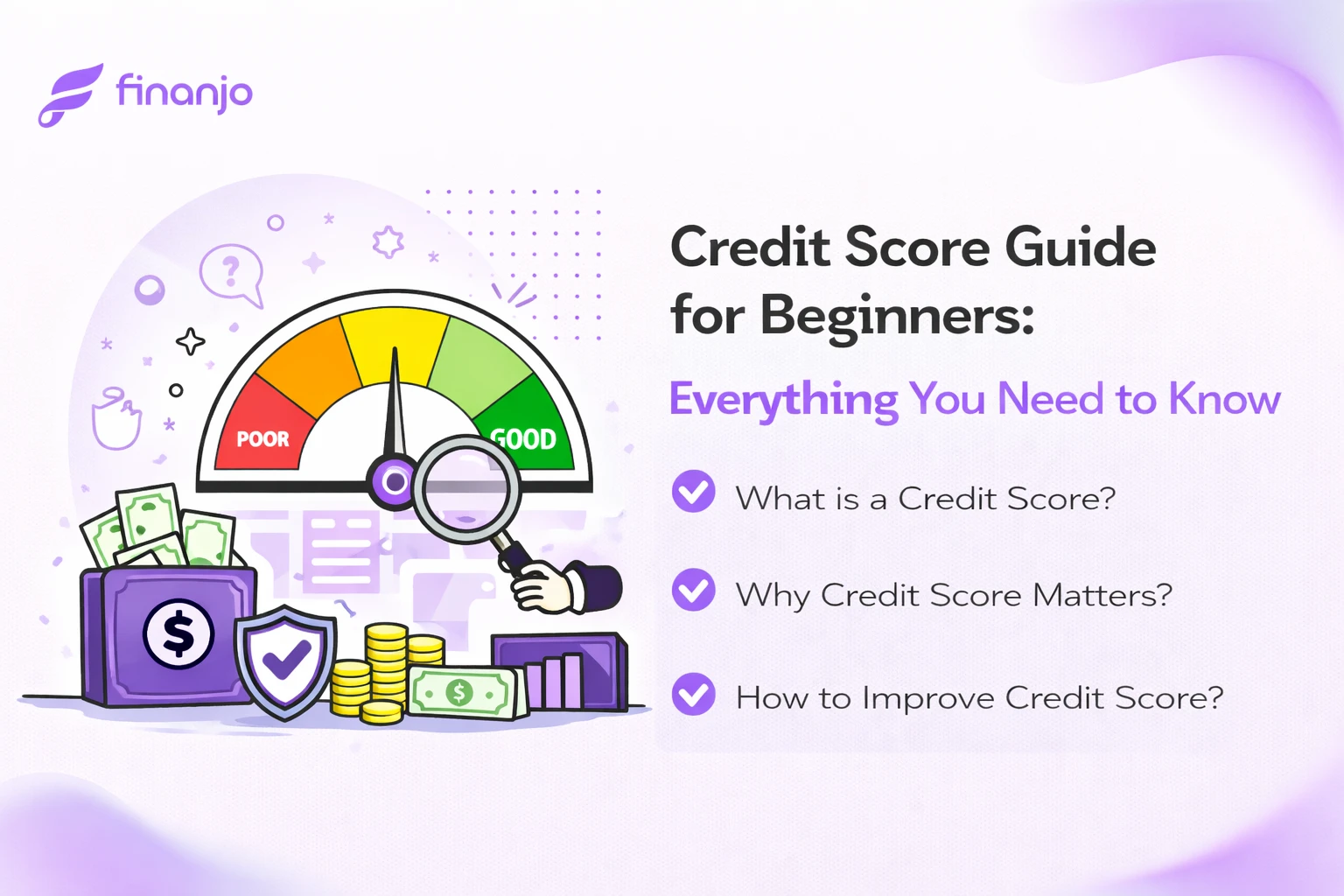
What is a Credit Score?
A credit score is a 3-digit number that represents how responsibly you have handled borrowed money in the past.
In simple words, it answers one question for banks and lenders:
“If we lend money to the person, how likely are they to repay it on time?”
Instead of knowing you personally, banks rely on your past financial behaviour. That behaviour is converted into a number your credit score.
In India, credit scores generally range from 300 to 900.
- Higher score → You look trustworthy
- Lower score → You look risky
The higher your score, the easier it becomes to get loans, credit cards, and better interest rates.
Credit Score Explained With a Simple Example
Let’s understand this with a real-life scenario.
Rahul and Aman both apply for a personal loan of ₹5 lakh from the same bank.
| Person | Monthly Income | Credit Score | Result |
|---|---|---|---|
| Rahul | ₹50,000 | 780 | Loan approved at 11% interest |
| Aman | ₹50,000 | 620 | Loan rejected / higher interest offered |
Both earn the same salary. Both want the same loan. The difference is not income it’s credit score.
This is why your credit score matters even before your salary slips or bank balance.
What Is a Good Credit Score in India?
Most banks and financial institutions in India consider a credit score of 700 or above as good.
Here’s how credit score ranges are generally interpreted:
| Credit Score Range | Category | What It Means |
|---|---|---|
| 750 – 900 | Excellent | High approval chances, lowest interest rates |
| 700 – 749 | Good | Easy approvals, slightly higher rates |
| 650 – 699 | Fair | Limited options, higher interest |
| 550 – 649 | Poor | Loan rejection likely |
| Below 550 | Very Poor | Very difficult to get credit |
Even a difference of 20–30 points can significantly change loan offers and interest rates.
Why Credit Score is Important in Real Life
Most people believe that a credit score matters only when you apply for a loan. In reality, your credit score quietly impacts many important financial decisions in your life, often without you even realizing it.
In simple words, your credit score tells banks and financial institutions one thing:
Can this person be trusted with borrowed money?
How Banks Actually Use Your Credit Score
Whenever you apply for a loan or a credit card, banks do not personally know you. They do not know your habits, your mindset, or your intentions. So instead of trusting words, they trust data.
Your credit score acts as a shortcut decision-making tool for banks. A higher score means lower risk, and a lower score means higher risk.
Things That Are Directly Affected by Your Credit Score
Your credit score impacts much more than just loan approval.
Here are the major areas where it plays a critical role:
- Loan approval or rejection – Home loans, personal loans, car loans, education loans
- Interest rates – Higher score usually means lower interest
- Credit card approval – Eligibility and type of card offered
- Credit limit – How much spending power you get on a card
- Loan processing speed – Faster approvals for high-score users
Hidden Impact: How a Low Credit Score Can Cost You More Money
Many people think, “Even if my credit score is low, I’ll still get a loan.”
While that may be true in some cases, the real problem is the cost.
A lower credit score usually means:
- Higher interest rates
- Additional processing fees
- Lower loan amounts
- Stricter repayment terms
Over the long term, this can cost you lakhs of rupees in extra interest.
Does Credit Score Matter Even If You Don’t Need a Loan?
Yes, and this is where many people get surprised.
You may not need a loan today, but life changes.
You may want to:
- Buy a house in the future
- Start a business
- Handle a medical emergency
- Upgrade your lifestyle
Building a good credit score early ensures that when you actually need credit,
you are not rejected or forced into expensive options.
Credit Score as a Financial Reputation
Think of your credit score as your financial reputation.
Just like a good reputation takes time to build and seconds to damage, your credit score also reflects years of financial behavior.
The good news is that even if your credit score is low today, it is not permanent. With disciplined habits and correct actions, it can be improved over time.
Is 700 a Bad Credit Score?
No, a credit score of 700 is not bad.
It is considered decent, but not excellent.
With a 700 score:
- You may get loans approved
- Interest rates may be slightly higher
- Credit limits may be lower
If your score is around 700, improving it to 750+ can significantly improve loan terms.
What Happens If Your Credit Score Is Below 650?
A credit score below 650 is a warning sign.
Lenders see this as an indicator of:
- Late payments
- High credit card usage
- Loan defaults or settlements
At this stage:
- Unsecured loans become difficult
- Credit cards may be rejected
- Only secured loans (FD-backed, gold loans) may be available
The good news is that a low credit score is not permanent and can be improved with consistent effort.
Does a Small Difference in Credit Score Matter?
Yes, even a difference of 20–30 points can matter.
For example:
- A score of 740 vs 760 can change interest rates
- A score of 680 vs 700 can decide approval vs rejection
This is why tracking and maintaining your credit score regularly is important.
Your credit score range determines how lenders treat you.
Instead of aiming for “just okay”, aim for the excellent zone (750+). It gives you financial flexibility, peace of mind, and better control over your borrowing options.
Why Lenders Prefer Higher Credit Score Ranges
Lenders use credit score ranges to reduce risk.
A higher score means:
- You have paid past EMIs on time
- You do not overuse credit cards
- You apply for credit responsibly
- You have a stable credit history
From a bank’s perspective, lending to someone with a 780 score is far safer than lending to someone with a 620 score,
even if both earn the same salary.
Does Credit Score Range Differ Across Bureaus?
While the range (300–900) remains the same across bureaus like CIBIL, Experian, Equifax, and CRIF,
your exact score may differ slightly between them.
This happens because:
- Not all lenders report to every bureau
- Data update cycles may vary
- Scoring models are slightly different
A difference of 10–30 points between bureaus is normal and usually not a cause for concern.
Your credit score range decides how easy or difficult your financial life will be.
Staying above 750 should be a long-term goal if you want stress-free access to loans and credit cards.
How Is Credit Score Calculated in India?
Your credit score is not a random number. It is calculated using a clear logic based on how you handle borrowed money over time.
Banks and lenders do not look at your income alone they focus more on your past credit behaviour.
In India, credit bureaus like CIBIL, Experian, Equifax, and CRIF High Mark calculate your credit score using
information from your credit report.
While the exact formula is not publicly disclosed, the factors and their importance are well known.
The 5 Major Factors That Decide Your Credit Score
| Factor | Approx Weightage | Why It Matters |
|---|---|---|
| Payment History | 35% | Shows whether you repay on time |
| Credit Utilisation | 30% | Shows how much credit you use |
| Credit History Length | 15% | Shows how experienced you are with credit |
| Credit Mix | 10% | Shows balance between loans & cards |
| Credit Enquiries | 10% | Shows how frequently you apply for credit |
Let’s understand each factor in detail with real-life examples.
1. Payment History (35%) – The Most Important Factor
Payment history shows whether you pay your EMIs and credit card bills on time.
This is the single biggest factor affecting your credit score.
Every time you delay a payment even by one day it is recorded in your credit report.
What counts as negative?
- Late EMI payments
- Late credit card bill payments
- Missed payments
- Loan defaults
- Settled or written-off loans
Real example:
Rohit has a credit card with a bill due date of 5th every month.
He forgets to pay and clears the bill on 10th.
Even though he paid the full amount, the delay gets reported.
Result: His credit score drops by 40–80 points.
This is why lenders say: “Pay on time, every time.”
2. Credit Utilisation Ratio (30%) – How Much Credit You Use
Credit utilisation means how much of your available credit limit you are using.
It applies mainly to credit cards and overdrafts.
The formula is simple:
Credit Utilisation = Used Credit ÷ Total Credit Limit
Ideal utilisation: Below 30%
Example:
- Credit card limit: ₹1,00,000
- Amount used: ₹25,000 → Utilisation = 25% (Good)
- Amount used: ₹85,000 → Utilisation = 85% (Bad)
High utilisation signals financial stress, even if you pay bills on time.
Many people make the mistake of using the full limit thinking:
“If the bank gave me the limit, I can use it.”
In reality, using too much credit regularly hurts your score.
3. Credit History Length (15%) – How Old Your Credit Is
This factor looks at how long you have been using credit.
Older credit history builds more trust with lenders.
It includes:
- Age of your oldest loan or credit card
- Average age of all credit accounts
Common mistake:
People close their oldest credit card thinking it will improve their score.
In most cases, it does the opposite.
Example:
Neha has a credit card since 2016 with perfect repayment history.
She closes it and applies for a new card in 2024.
Her credit history length reduces sharply, and her score drops.
Lesson: Keep old, well-managed accounts active.
4. Credit Mix (10%) – Balance Between Loans and Cards
Credit mix refers to the type of credit you use.
Lenders prefer borrowers who can manage different types of credit responsibly.
Examples of credit types:
- Credit cards (unsecured)
- Personal loans (unsecured)
- Home loans (secured)
- Car loans
- Education loans
Having only credit cards or only loans is not bad,
but a healthy mix is better for long-term score improvement.
Do not take unnecessary loans just to improve credit mix.
It should happen naturally over time.
5. Credit Enquiries (10%) – How Often You Apply for Credit
Every time you apply for a loan or credit card, the lender checks your credit report.
This is called a hard enquiry.
Too many hard enquiries in a short period signal desperation for credit.
Example:
Ajay applies for 5 credit cards and 2 personal loans within one month.
All lenders see multiple enquiries.
Even before approvals, his credit score drops by 20–50 points.
Important clarification:
- Checking your own credit score = Soft enquiry (No impact)
- Loan or card application = Hard enquiry (Impacts score)
How Credit Score Is Really Built
Your credit score is not about how rich you are.
It is about how disciplined you are with borrowed money.
Focus on these habits:
- Pay everything on time
- Keep credit usage low
- Avoid unnecessary applications
- Build long-term credit history
How to Check Your Credit Score for Free in India
One of the biggest myths around credit score is that checking your credit score will reduce it.
This is completely false. You can check your credit score for free as many times as you want without any negative impact. In fact, checking your credit score regularly is considered a good financial habit.
Your credit score is affected only by hard enquiries, which happen when:
- You apply for a loan
- You apply for a credit card
- A lender checks your report for approval
Simply viewing your score or credit report is completely safe.
How to Check Credit Score for Free Step by Step
In India, RBI regulations allow users to check their credit score for free at least once a year. Most platforms now allow it multiple times for free.
- Visit a trusted credit score platform
- Enter basic details like name, mobile number, and PAN
- Verify your identity using OTP
- View your credit score instantly
The entire process usually takes less than 2 minutes.
What Details Are Required to Check Credit Score?
To fetch your credit score, credit bureaus need to confirm your identity.
This is why a few basic details are required.
- PAN card number
- Mobile number linked to PAN
- Date of birth
- Address (in some cases)
Without a PAN card, it is usually not possible to generate a full credit report.
What You See When You Check Your Credit Score
A credit score page usually shows more than just a number.
It gives you a quick summary of your credit health.
- Your current credit score
- Score category (Excellent, Good, Fair, Poor)
- Summary of active loans and credit cards
- Payment history overview
- Recent credit enquiries
Some platforms also show personalized tips to improve your score.
How Often Should You Check Your Credit Score?
There is no strict rule, but the following frequency works well for most people:
- Once every 2–3 months if you actively use credit cards or loans
- Before applying for a loan or credit card
- After repaying a loan or clearing large dues
Regular checks help you catch errors early and avoid surprises during loan applications.
What If Your Credit Score Is Not Showing?
Sometimes, when you check your credit score, you may see messages like:
- No credit history found
- Score not generated yet
- Thin credit file
This usually means you have never used any formal credit.
In such cases, your credit score will be generated once you:
- Get your first credit card
- Take a small loan
- Use a secured credit product
Even one responsibly used credit card is enough to start building a credit score.
Important Tips While Checking Credit Score
- Always check your score only on trusted platforms
- Never share OTPs or PAN details with unknown sources
- Ignore calls claiming to “fix” your score instantly
- Focus on habits, not just the number
Checking your credit score regularly gives you control over your financial future. It helps you stay prepared instead of reacting after rejection.
How to Improve Your Credit Score in India (Step-by-Step Guide)
A low credit score is not permanent. This is one of the most important things you should understand. Your credit score changes based on your financial behaviour, and with the right actions, it can be improved. Whether your credit score is below 600, stuck between 600–700, or you want to move from good to excellent (750+), this section explains exactly what to do, why it works, and how long it takes.
1. Understand Your Current Credit Score Situation
Before trying to improve your credit score, you must know why it is low or average. Improving blindly without understanding the cause often leads to slow or zero results.
Broadly, credit score problems fall into three categories:
- Payment-related issues – late EMIs, missed credit card payments
- Usage-related issues – high credit card utilisation
- History-related issues – short credit history, past defaults or settlements
Once you identify the category, improvement becomes easier and faster.
2. Pay All EMIs and Credit Card Bills on Time (Most Important)
Payment history has the highest impact on your credit score. Even a single late payment can reduce your score by 50 to 100 points.
Real-life example:
Rohit had a credit score of 760. He forgot to pay his credit card bill for one month and paid it 15 days late. His score dropped to 705. One missed payment can undo months of good behaviour.
What you should do:
- Enable auto-debit for EMIs and credit cards
- Set reminders 3–5 days before the due date
- Always pay at least the minimum due (full payment is better)
Consistency matters more than amount. Even small dues must be paid on time.
3. Reduce Credit Card Utilisation (Target Below 30%)
Credit utilisation means how much of your available credit limit you are using. This factor alone contributes nearly 30% of your credit score.
Ideal rule: Use less than 30% of your total credit limit.
Example:
If your total credit card limit is ₹1,00,000:
- Using ₹80,000 → Bad for credit score
- Using ₹25,000 → Good for credit score
Even if you pay your bill on time, high usage signals financial stress to banks.
How to reduce utilisation:
- Pay credit card bills multiple times in a month
- Request a credit limit increase (without increasing spending)
- Use debit cards or UPI for daily expenses
4. Do Not Close Old Credit Cards
Many people close old credit cards thinking it will improve their credit score. In reality, it often does the opposite. Older cards increase your credit history length, which is an important scoring factor.
Example:
Anjali closed her first credit card which she had used for 7 years. Her credit history suddenly became shorter, and her score dropped by 30 points.
Best practice:
- Keep old cards active with small transactions
- Close cards only if they have very high fees
5. Avoid Applying for Multiple Loans or Cards Together
Every time you apply for a loan or credit card, the lender checks your credit report. This is called a hard enquiry. Too many enquiries in a short time period make you look credit-hungry.
Bad example:
- Applying for 4 credit cards in one month
- Applying for loan offers just to “check eligibility”
Good practice:
- Apply only when necessary
- Space applications at least 3–6 months apart
6. Maintain a Healthy Credit Mix
Credit mix refers to having different types of credit, such as:
- Credit cards (unsecured)
- Personal loans
- Home or education loans (secured)
A balanced mix shows that you can handle different types of borrowing responsibly.
However, do not take a loan just to improve your credit mix. Only borrow if there is a genuine need.
7. Check Your Credit Report for Errors
Sometimes, your credit score is low not because of your mistake, but because of incorrect data in your credit report.
Common errors include:
- Loan shown as unpaid even after closure
- Incorrect late payment records
- Accounts that do not belong to you
If you find an error, raise a dispute with the credit bureau. Once corrected, your score can improve significantly.
How Long Does It Take to Improve a Credit Score?
Credit score improvement is not instant. The timeline depends on the severity of issues.
| Issue Type | Expected Time |
|---|---|
| High credit card usage | 1–2 months |
| Late payments | 3–6 months |
| Loan default or settlement | 6–12 months |
Patience and discipline are key. There are no shortcuts. Improving your credit score is about building good habits, not finding hacks. If you pay on time, use credit wisely, and avoid unnecessary debt, your score will improve naturally.
Common Credit Score Myths (And the Real Truth)
There is a lot of misinformation around credit scores in India. Because of these myths, many people unknowingly damage their credit score or delay improving it.
Myth 1: Checking Your Credit Score Reduces It
Truth: Checking your own credit score does NOT reduce it. When you check your credit score through a personal finance platform, it is counted as a soft enquiry. Soft enquiries have zero impact on your credit score. Only loan or credit card applications made to banks are considered hard enquiries, and too many of those can reduce your score.
Example:
If you check your credit score every month to track improvement, your score will remain safe.
But if you apply for 5 credit cards in one month, your score may drop.
Myth 2: High Income Means High Credit Score
Truth: Your income does not directly affect your credit score. Credit score is based on how you handle credit, not how much you earn.
Example:
- A person earning ₹30,000 per month but paying EMIs on time can have a 780+ score.
- A person earning ₹1,50,000 per month but missing credit card payments can have a 600 score.
Banks look at income to decide how much to lend, but they look at credit score to decide whether to lend.
Myth 3: Closing Old Credit Cards Improves Credit Score
Truth: Closing old credit cards can actually hurt your credit score.
Old credit cards help in:
- Increasing your credit history length
- Lowering your credit utilisation ratio
Example:
If you close your oldest credit card with a ₹2 lakh limit, your total available credit reduces. This increases your credit utilisation percentage, which may lower your score. Unless a card has very high fees or causes spending problems, it is usually better to keep old cards active.
Myth 4: Paying Minimum Due Is Enough
Truth: Paying only the minimum due protects you from late fees, but it does not protect your credit score fully.
When you pay only the minimum amount:
- Interest keeps adding up
- Your credit utilisation remains high
- Your score improves very slowly or may even drop
Best practice:
Always try to pay the full credit card bill before the due date.
Myth 5: No Loans or Credit Cards Means No Credit Score Problems
Truth: No credit history can be as bad as poor credit history. If you have never taken a loan or used a credit card, banks have no data to judge your credit behaviour. This is called having a thin or no credit file.
Example:
A first-time loan applicant with no credit history may face rejection or higher interest rates, even if their income is stable. Having at least one credit card and using it responsibly helps build a healthy credit profile.
Myth 6: Credit Score Improves Automatically Over Time
Truth: Credit score improves only with correct actions, not just time. If late payments, high credit usage, or defaults continue, time alone will not fix your score.
Improvement happens when you:
- Pay all dues on time
- Reduce outstanding balances
- Avoid unnecessary credit applications
Myth 7: Small Amount Defaults Don’t Matter
Truth: Even small unpaid amounts can seriously damage your credit score. Credit bureaus do not judge the size of the amount they judge repayment behaviour. Always clear even small dues and check your credit report regularly to avoid such surprises.
Example: An unpaid ₹300 credit card charge left for several months can reduce your score as much as a large EMI default.
FAQs about Credit Score
1. What is a good credit score in India?
A credit score of 750 or above is considered good in India. With a score in this range, banks and NBFCs see you as a low-risk borrower.
This usually means:
- Higher chances of loan and credit card approval
- Lower interest rates
- Faster processing and better credit limits
2. Can I get a loan with a low credit score?
Yes, it is possible but it becomes difficult and expensive.
If your credit score is below 650:
- Banks may reject your application outright
- You may only get loans from NBFCs or fintech lenders
- Interest rates will be much higher
- Loan amount may be smaller than expected
Example:
Two people apply for the same personal loan of ₹5 lakh.
- Credit score 780 → Interest rate around 11%
- Credit score 620 → Interest rate around 20% or rejection
3. How long does it take to improve a credit score?
The time required depends on why your score is low.
| Reason | Expected Time |
|---|---|
| High credit card usage | 1–3 months |
| Late payments | 3–6 months |
| Loan default or settlement | 6–12 months or more |
Credit score improvement is not instant. It improves gradually as you show
better financial behaviour consistently.
4. Does checking my credit score reduce it?
No. Checking your own credit score does not reduce it. When you check your score yourself, it is recorded as a soft enquiry,
which has no impact on your credit score. Only hard enquiries like applying for loans or credit cards can affect your score.
5. How often should I check my credit score?
Ideally, you should check your credit score:
- Once every 2–3 months
- Before applying for a loan or credit card
- If a loan or card application is rejected
Regular checks help you spot errors early and track improvement.
6. Does income affect credit score?
No. Your income does not directly affect your credit score. Credit score is based on how you manage borrowed money, not how much you earn.
For example: A person earning ₹30,000 per month can have a higher credit score than someone
earning ₹1 lakh per month if their repayment behaviour is better.
7. Can students or first-time users have a credit score?
If you have never taken a loan or used a credit card, you may not have a credit score yet.
This is called “no credit history”.
Students and first-time earners can start building a score by:
- Getting a secured credit card
- Using a low-limit credit card responsibly
- Paying all dues on time
8. Does UPI affect credit score?
Normal UPI transactions do not affect your credit score.
However, if you use:
- UPI-based credit lines
- Buy Now Pay Later (BNPL) linked to UPI
Then repayment behaviour may impact your credit score.
9. What happens if I miss one EMI?
Missing even one EMI can negatively affect your credit score.
Impact depends on:
- How late the payment is
- Your past repayment history
- Type of loan or credit card
A single delay may reduce your score by 20–100 points.
10. How often is Credit score calculated ?
Your credit scores typically update at least once a month.
A credit score is dynamic. It changes based on your ongoing financial behaviour. Bad habits can reduce it, and good habits can rebuild it over time. Think of your credit score as a live reputation, not a one-time exam.
Conclusion
Your credit score is much more than just a 3-digit number it is a reflection of your financial discipline and reliability over time. It quietly influences whether your loan gets approved or rejected, how much interest you pay, and how easily you can access credit when you need it the most. Income, job title, or savings alone cannot compensate for poor credit behaviour.
The most important thing to understand is that credit score is not permanent. Whether your score is excellent, average, or low, it keeps changing based on your actions. Paying EMIs and credit card bills on time, keeping credit usage low, avoiding unnecessary loan applications, and maintaining a long, clean credit history can steadily improve your score.
Building a strong credit score early gives you financial freedom and peace of mind in the long run. Instead of worrying about approvals or high interest rates later, focus on developing good credit habits today. Treat your credit score as your financial reputation protect it, monitor it regularly, and it will work in your favor whenever you need it most.
Leave a Reply