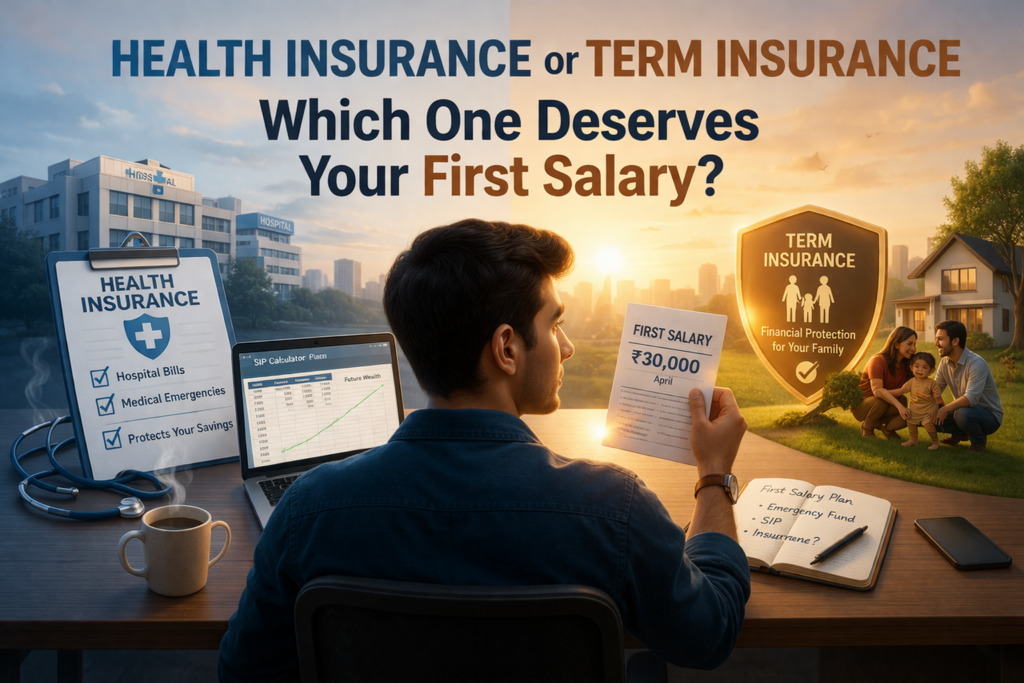
At Finanjo, there is a pattern that shows up again and again in early careers. The first salary is expected to change spending. It changes how people start thinking about money, SIPs, EMIs, term insurance and health insurance. Slightly but not all at once.
A 22-year-old fresh out of college lands their first job in Bangalore. The first salary arrives, and something shifts, not dramatically, but enough to make them pause and look at their bank balance twice.
One evening, out of curiosity, Excel gets opened. No big plan. Just to see. If ₹10,000 goes into a SIP every month, how long until the net worth hits ₹10 lakh? The numbers move around on the screen. For ten minutes or so, adulthood feels structured. Almost manageable.
Then someone casually says, “You should buy insurance.” The mood changes slightly.
Health insurance or term insurance. Both sound important. Both sound like things responsible adults are supposed to have. But which one actually comes first? That is where things get a bit unclear.
So let’s think this through, properly, without turning it into a lecture.
What Do These Policies Actually Do?
Term Insurance Is About Income Replacement
Term insurance exists for one reason. If you die during the policy term, your nominee receives a lump sum. That money is meant to replace the income you would have earned over the coming decades.
It does not pay for illness. It does not generate returns. It does not build wealth. That simplicity feels strange at first. It protects people who depend on your earning ability. If nobody depends on your income yet, its urgency shifts slightly. Not its importance. Just its timing.
Health Insurance Is About Damage Control
Health insurance works differently. It pays for hospitalisation expenses as per policy terms. Surgery, treatment, room rent, procedures, all of it depending on coverage.
It protects savings. The emergency fund built slowly over months. The SIPs that felt like a small win when they started. The money that took time and restraint to accumulate. It prevents one hospital bill from quietly undoing that effort. It is not exciting. It is structural.
The Reality of Risk in India
According to the Insurance Regulatory and Development Authority of India Annual Report 2023-24, health insurance premium collections crossed Rs 1.07 lakh crore. Around 57 crore lives were covered, with approximately 3.26 crore claims filed and 2.69 crore settled.
That volume says something important. Hospitalisation is not rare. It is not an outlier event.
Economic Times BFSI reported over 20 percent year-on-year premium growth for health insurers in FY 2023-24. Medical inflation in India continues to sit somewhere between 8 and 12 percent annually, and in metro cities like Mumbai, Delhi NCR, or Bengaluru, costs can rise even faster inside private hospitals.
Out-of-pocket healthcare spending still forms a significant share of total expenditure, as shown in National Health Accounts data. So hospital bills are not hypothetical risks. They are frequent financial events. Mortality in your late 20s is statistically low. Hospitalisation is not statistically surprising.
Probability matters here more than instinct.
If You Are 25 to 35, What Hits First?
Let us keep this grounded.
Most 26-year-olds are not actively facing mortality risk. What they do face is something else. Stress that builds slowly. Sleep that keeps getting shorter. Minor surgeries. Sports injuries that take longer to heal than expected. Viral infections that do not remain “just viral.” Thyroid issues. Early hypertension.
Urban corporate life does not exactly protect health. From a practical perspective, a hospital bill is more likely to interrupt finances in your 20s than a term insurance payout event. That does not remove the need for term insurance. It just affects when it becomes urgent.
The Financial Impact Test
| Scenario | Age 28 | Age 30 (Married, Home Loan) |
| Annual Income | ₹9 lakh | Assumed primary earning member |
| Emergency Fund | ₹3 lakh | Likely allocated partly toward EMI & family needs |
| Monthly SIP | ₹10,000 | May be higher but tied to obligations |
| Financial Commitment | Individual goals | ₹60 lakh home loan + household expenses + partly dependent parents |
| Event | Medical emergency | Permanent income stoppage |
| Impact Without Insurance | ₹2.4 lakh hospital bill wipes out most of emergency fund | Immediate strain on family finances |
| Immediate Consequence | Investments paused | EMI continues |
| Financial confidence dips | Household costs continue | |
| Time lost in rebuilding savings | Medical expenses still possible | |
| Long-Term Effect | Lost compounding time | Family’s financial stability at risk |
| Insurance Needed | Health insurance | Term insurance (non-negotiable) |
| Wider Context | — | India’s insurance penetration ~3.7% of GDP (2023-24) |
Imagine being 28. Income ₹9 lakh. Emergency fund ₹3 lakh. SIP ₹10,000 per month. A medical emergency shows up. Bill of ₹2.4 lakh.
Without health insurance, the emergency fund is almost gone. Investments pause without much thought. Financial confidence dips more than expected. Rebuilding happens, but something feels slower. Momentum breaks, and that part is hard to measure.
Now shift the picture. Age 30. Married. ₹60 lakh home loan. Parents partly dependent. If income stops permanently, the financial strain does not arrive slowly. It is immediate. EMI does not wait. Household costs do not reduce. Medical expenses still exist.
This is where term insurance becomes non-negotiable. Low insurance penetration in India reflects that many people remain under-protected against income loss.
Employer Insurance Is Temporary
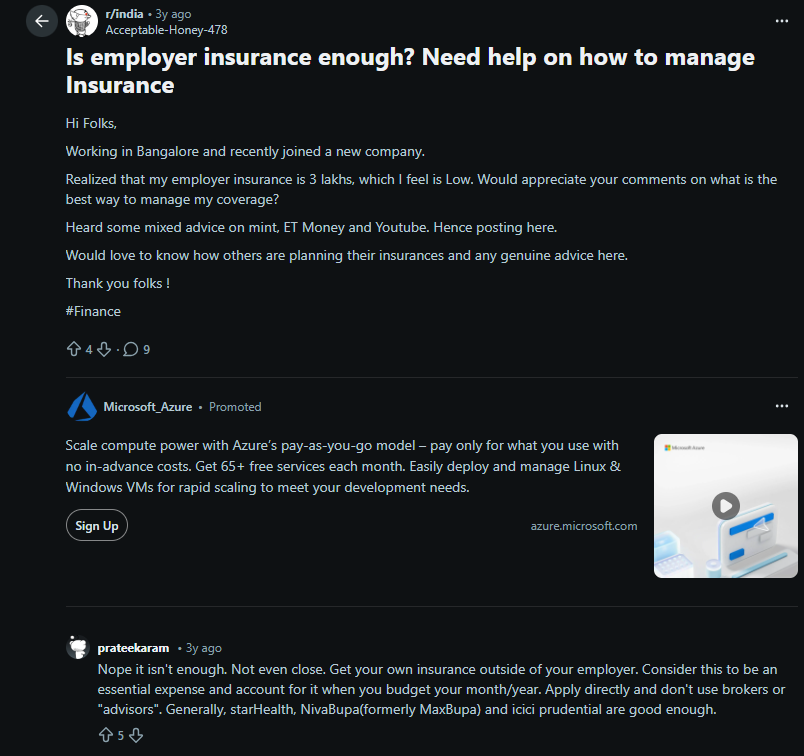
Corporate health cover feels sufficient in the beginning. It is convenient. The premium is invisible, deducted somewhere in the backend. But it comes with limitations.
It ends when employment ends. Coverage limits are often modest. Parents may have sub-limits. Room rent caps quietly reduce usable cover in better hospitals. Switch jobs. Take a break. Start something new. The coverage disappears.
A personal health policy works differently. It builds continuity. Waiting periods start early. Portability improves. Control stays with you. Employer cover helps. It is not foundational.
Common Early-Career Mistakes in Choosing Between Health and Term Insurance
This is where most young earners do not go completely wrong, but slightly off track.
1. Relying Only on Employer Health Cover
It feels efficient. No visible cost, decent coverage.
But the moment you resign or take a break, it disappears. Parents may not be fully covered. Limits may fall short in Tier 1 cities. Buying personal health insurance early quietly builds continuity. Waiting periods start early. Delaying that start usually costs more later.
2. Buying Term Insurance Just Because It Is Cheap
Term insurance at 25 is inexpensive, which makes it tempting. But if nobody depends on your income yet, urgency is lower. Not zero. Just lower. Insurance should follow financial responsibility, not trends.
3. Choosing Very Low Sum Insured to Save Premium
A ₹3 lakh policy in cities like Mumbai or Gurugram may not cover a single complex surgery fully. Underinsurance creates a sense of safety without actual protection. Saving a small premium today can expose a much larger risk later.
4. Mixing Insurance and Investment Too Early
Endowment plans and ULIPs often sound efficient. But mixing protection and investment can complicate things early on. Costs, restrictions, and reduced flexibility follow. Clarity helps more in early years.
5. Never Reviewing Coverage as Income Grows
Insurance bought at 24 should not remain unchanged at 40. Income grows. Responsibilities expand. Life changes. Coverage should move with it.
The Cost of Delay: Why “I Will Buy It Later” Rarely Works
Delaying insurance in your 20s feels harmless. You are healthy. Nothing urgent is happening. So the decision keeps moving forward. Premiums do not wait for your career to stabilise.
At 24, insurers see low risk. At 34, they see higher exposure. Even if you feel the same, the math changes. Over decades, that difference adds up quietly. Waiting periods also behave differently. Buy early, they pass unnoticed. Buy late, they start when risk is already rising.
Medical underwriting becomes stricter with time. At 25, minimal checks. At 35, detailed tests. At 40, small issues can change pricing. And then there is something less obvious. Delay becomes habit.
At 26, it feels unnecessary. At 34, it feels expensive. The easier window existed earlier. It just did not feel urgent at the time.
Designing Smart Coverage: How Much Is Enough
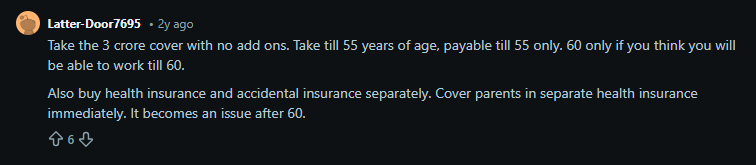
Early earners often swing between extremes. Either minimal cover or exaggerated numbers based on random advice.
The middle ground usually works better. Health insurance should be thought of in replacement terms. If one hospitalisation wipes out your emergency fund, coverage is probably insufficient. For Tier 1 cities, ₹5 lakh to ₹10 lakh often works as a starting base. Many add a super top-up for additional coverage. Term insurance should map responsibility. Not just income.
Instead of multiplying salary, think in years of support. How long should your family maintain their lifestyle if income disappears? Layering policies can also help. Start small. Increase gradually as responsibilities grow.
Inflation needs to be considered in both cases. Healthcare costs rise faster than expected. Income does not always keep pace. A ₹1 crore cover today will not feel the same decades later. Which is why revisiting coverage matters.
Marriage. Home loan. Parents retiring. Business risks. Each stage shifts exposure. Small adjustments over time prevent large gaps later.
So Which One First?
If you are single, financially independent, with no dependents and limited savings, health insurance usually addresses the more immediate risk. If dependents or liabilities exist, term insurance becomes equally important. If the budget allows, buying both early creates a strong base.
Health insurance protects the savings you are building today. Term insurance protects the income others may rely on tomorrow. When both risks are covered, financial growth becomes smoother. Fewer interruptions. Less stress.
At Finanjo, the idea is simple. Protection first, then growth. Because compounding works best when nothing keeps interrupting it.
Leave a Reply