If you want to take control of your finances, the first step is understanding your creditworthiness. You’ve probably heard terms like credit score, CIBIL score, and credit report being used interchangeably, but they’re not the same. Each one plays its own role in your financial life, and knowing the difference can actually save you time, money, and a lot of stress. A good credit score or CIBIL score can make it easier to get loans or credit cards approved, while keeping an eye on your credit report helps you spot errors and manage your debts better. In this article, we’ll break down these terms in simple, easy-to-understand language and show you how understanding them can improve your financial health and open up better borrowing opportunities.
What Is a Credit Score and Why Should You Care ?
Think of your Credit Score as your Financial Report Card. It is a three-digit number, usually between 300 and 900, that tells lenders how responsible you are with money. The higher your score, the more confident banks feel lending to you and the better interest rates and credit options you can unlock.
But don’t stress it’s not just about numbers. Understanding your credit score can actually give you more control over your financial life.
What Shapes Your Credit Score?
- Credit History: Your Experience Counts
How long you’ve been using credit matters. A long, steady track record of responsible borrowing is like telling lenders, “I’ve got this.” - Types of Credit: Mix It Up
Credit cards, personal loans, car loans, mortgages, they all count. Using a healthy mix shows you can handle different financial responsibilities. - Payment History: On-Time Is Everything
Paying your bills late even once can hurt your score. Think of it as building trust—on-time payments show lenders they can rely on you. - New Credit Applications: Don’t Overdo It
Every time you apply for a loan or card, lenders peek at your history. Too many applications in a short time can make you look desperate for credit. - Debt-to-Income Ratio: Keep It Balanced
High debt compared to your income can drag your score down. It’s all about keeping a healthy balance and not biting off more than you can chew.
Simple Tips to Keep Your Credit Score Happy
- Pay bills and EMIs on time (seriously, this matters more than you think!).
- Keep your credit card usage below 30% of your limit.
- Mix different types of credit responsibly.
- Don’t flood banks with too many loan applications.
- Check your credit report for mistakes you deserve to have it right!
Why Bother Checking Your Credit Score?
Keeping an eye on your credit score is like tracking your financial fitness. A strong score can save you money on loans, help you snag better credit cards, and give you confidence that your finances are on track.
Remember, your credit score isn’t just a number, it’s your financial reputation. Treat it well, and it will open doors for your future!
What Is a CIBIL Score and Why It Matters in India ?
If you’ve ever applied for a loan, credit card, or mortgage in India, you might have come across the term CIBIL score. But what exactly is it, and why is it so important? Let’s break it down.
A CIBIL score is a type of credit score issued by Credit Information Bureau (India) Limited. Like other credit scores, it ranges from 300 to 900, where a higher score indicates better credit management and a lower risk for lenders.
Key Factors That Influence Your CIBIL Score
- Payment History
- Paying your loans and credit card bills on time has the biggest impact on your CIBIL score. Late or missed payments can significantly lower your score.
- Total Debt
The total amount of outstanding debt you carry affects your score. Managing and reducing debt shows lenders that you can handle credit responsibly.
- Types of Credit
Having a mix of credit cards, personal loans, home loans, or car loans is beneficial. A diverse credit portfolio indicates that you can manage multiple credit types effectively. - New Credit Applications
Applying for multiple loans or credit cards within a short period can lower your score slightly. Lenders view frequent applications as a sign of financial stress. - Credit Utilization
Keeping your credit usage within reasonable limits (ideally below 30% of your credit limit) is crucial. Over-utilization can negatively affect your score.
Advantages of a High CIBIL Score
- Having a strong CIBIL score can unlock several benefits:
- Easier Loan Approvals – Lenders trust you with loans faster.
- Lower Interest Rates – Save money on EMIs with better rates.
- Higher Credit Limits – Access more funds when needed.
- Faster Credit Approvals – Get approvals without delays.
How to Check Your CIBIL Score ?
You can check your CIBIL score and credit report for free once a year through the official CIBIL website or via authorized banks. A score of 750 and above is generally considered healthy and improves your chances of getting loans and credit cards with favorable terms.
What Is a Credit Report and Why It Matters ?
If your credit score is a snapshot of your financial health, your credit report is the full story. Unlike a score, which is just a number, a credit report is a detailed record of your credit history. In India, major credit bureaus like CIBIL, Experian, Equifax, and CRIF Highmark compile these reports to help lenders assess your financial behavior.
What Does a Credit Report Contain?
- Personal Information
Your name, address, date of birth, and contact details—basically, the information that identifies you. - Credit Accounts
Every loan, credit card, and limit you’ve had is listed here. Lenders can see how much credit you currently use and how responsibly you manage it. - Payment History
Records of your on-time payments, missed payments, or defaults. This is one of the most important sections because it directly affects your credit score. - Credit Inquiries
Every time you apply for a loan or credit card, it gets recorded as a hard inquiry. Lenders use this to see how often you’re seeking new credit. - Negative Events
Defaults, late payments, and bankruptcies are included here. These can stay on your report for years and affect your loan approvals and interest rates.
How Long Does Information Stay on Your Credit Report?
- Late Payments: Up to 7 years
- Bankruptcy: Up to 10 years
- Hard Inquiries: Up to 2 years
Why Your Credit Report Matters ?
A credit report gives lenders a detailed look at your financial behavior.
It helps them decide:
- Whether to approve your loan or credit card application
- What interest rate to offer you
- Your credit limits and repayment terms
- Regularly checking your credit report can help you spot errors, manage your debts better, and maintain a healthy financial profile.
Credit Score vs CIBIL Score vs Credit Report: Key Differences You Should Know
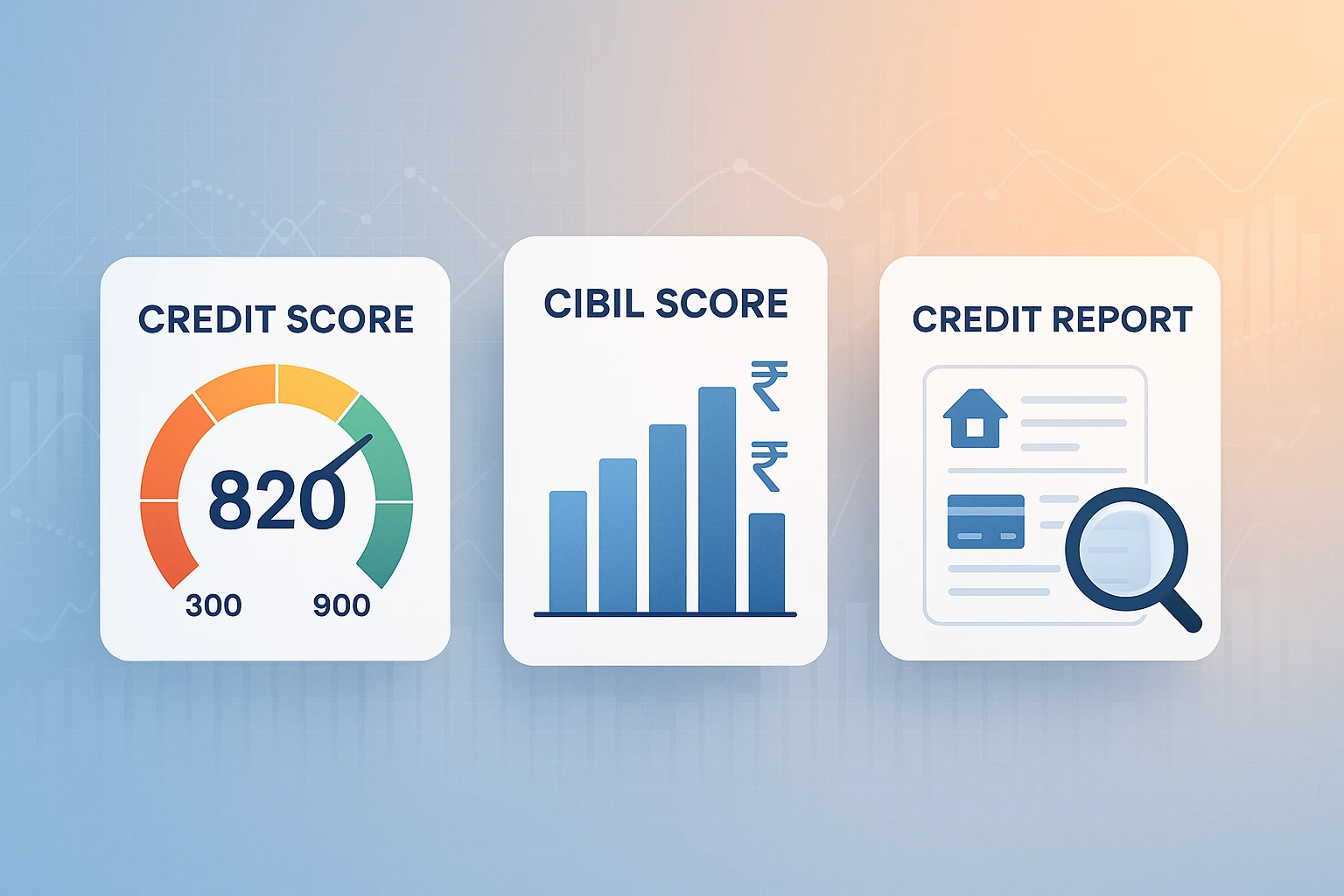
When it comes to loans, credit cards, or mortgages in India, understanding your credit profile is essential. Terms like credit score, CIBIL score, and credit report are often used interchangeably, but each plays a unique role in determining your financial credibility.
| Criteria | Credit Score | CIBIL Score | Credit Report |
|---|---|---|---|
| Definition | Numeric representation of your creditworthiness | Numeric score specific to CIBIL | Detailed summary of your credit history |
| Range | 300–900 | 300–900 | N/A |
| Issued By | Multiple bureaus like Experian, Equifax, TransUnion | CIBIL (TransUnion) in India | CIBIL, Experian, Equifax, CRIF Highmark |
| Purpose | Quick assessment of credit risk | Evaluates creditworthiness for Indian lenders | Provides a full credit history to lenders |
| Contains | Payment history, credit utilization, types of credit, length of history | Same as credit score but calculated by CIBIL | Personal info, loans, credit cards, payment history, inquiries, bankruptcies |
| Authority | Varies by country | Authorized by RBI, recognized in India | Authorized by RBI, recognized in India |
| Use in Loans | Evaluated by lenders worldwide | Widely used by Indian banks for loan approval | Used for in-depth evaluation of financial behavior |
Importance of Credit Score, CIBIL Score, and Credit Report in India
In India, both credit score and CIBIL score are crucial when applying for loans. These scores give lenders a quick insight into your financial reliability. Meanwhile, the credit report provides a detailed view of your repayment behavior and history.
- High Score: Faster loan approvals, better interest rates, and higher limits.
- Low Score: Loan rejections or higher interest rates.
- Credit Report: Helps identify errors, fraud, or negative trends affecting your score.
FAQs: Credit Score, CIBIL Score & Credit Report
Q1: What is the difference between a credit score and a CIBIL score?
A: A credit score is a 3-digit number (300–900) representing your creditworthiness and can be issued by any credit bureau like Experian, Equifax, or TransUnion. A CIBIL score is specifically generated by CIBIL (TransUnion) in India and is widely used by banks to evaluate loan eligibility.
Q2: How is a CIBIL score calculated?
A: Your CIBIL score is calculated based on factors like payment history, total debt, types of credit, new credit applications, and credit utilization ratio. Timely payments and a healthy mix of loans and credit cards can boost your score.
Q3: What is a credit report and why is it important?
A: A credit report is a detailed summary of your credit history, including loans, credit cards, payment behavior, and credit inquiries. Lenders use it to understand your financial behavior in detail before approving loans or credit cards.
Q4: Can checking my CIBIL score affect my credit report?
A: No, checking your CIBIL score through the official website or authorized partners is a soft inquiry and does not affect your credit score or report. Only loan applications and new credit requests create hard inquiries.
Q5: How often should I check my credit score and credit report?
A: It’s recommended to check your CIBIL score at least once a year and review your credit report regularly to ensure all data is accurate. This helps spot errors or fraud early.
Q6: What is a good CIBIL score for loan approval in India?
A: Generally, a CIBIL score above 750 is considered good by most banks and increases the chances of loan approval, lower interest rates, and higher credit limits.
Q7: How can I improve my CIBIL score quickly?
A: You can improve your score by paying dues on time, reducing outstanding debt, maintaining a mix of credit, avoiding multiple new credit applications, and regularly reviewing your credit report for errors.
Q8: Do credit scores differ across bureaus?
A: Yes, credit scores may vary slightly across bureaus like CIBIL, Experian, Equifax, and CRIF Highmark because each uses slightly different algorithms, even though the core factors remain similar.
Q9: What negative items can appear on my credit report?
A: Late payments, defaults, high credit utilization, multiple hard inquiries, and bankruptcies can appear on your credit report. These negatively impact your credit score and make loan approval harder.
Q10: Can a high credit score or CIBIL score help in other areas besides loans?
A: Absolutely! A strong CIBIL score or credit score can help in credit card approvals, insurance applications, rental agreements, and even job background checks in some cases. Lenders and institutions prefer individuals with a healthy credit profile.
Leave a Reply